
In short
- Use double progression: first add reps within the range, and once they hit the top on every set, add weight.
- RIR is the brake: if they had nothing left to finish the reps, it’s not time to go up yet.
- Decide based on what they logged, not the calendar, and ask your client to note how each set felt.
Go up when the log says so, not the calendar
The most common mistake is adding weight on autopilot: “It’s been two weeks, time for more.” That’s how you end up with clients cutting sets short or grinding through bad reps to hit a number that wasn’t theirs yet.
The healthy rule is the opposite: weight goes up when your client has actually done what you asked. If they haven’t, it stays the same, and that’s not failure. It’s information.
Double progression, step by step
It’s the simplest method and the one that works best with clients who train on their own. You prescribe a rep range and a fixed weight:
- Marta does goblet squats, 3 sets of 8-12 with 35 lb.
- Each week she tries to add reps: 8, 9, 10…
- Once she does 12 on all three sets with good form, the weight goes up (say, to 40 lb) and she goes back to 8.
That way something always improves, even if it’s one rep, and the jump in weight comes when the body is ready for it. For the jumps, think 2.5% to 5% of the load: on upper-body and dumbbell work, the smallest increment you have; on squats or deadlifts, a bit more.
RIR, the brake that keeps you from overdoing it
Hitting the reps isn’t enough. If Diego did 3 × 12 on the bench press but barely ground out the last set, he’s not ready for more weight. That’s where RIR comes in: reps in reserve, how many reps he had left in the tank at the end of the set.
If you ask for RIR 2 and he finishes with two more in him, you can go up. If he finishes with nothing left, repeat the weight for another week. RIR keeps you from adding weight just because the numbers line up.
For it to work, your client has to understand it. Explain it once with an example and ask them to tell you, set by set, whether it felt easy or all-out.
When not to go up, and when to go down
Some weeks the right move is to change nothing, or even to back off:
- They slept badly or are under a lot of stress. Repeat the weight.
- They skipped sessions. Go back to where they were before the last increase.
- Something hurts. Pause progression on that exercise and assess it before moving on.
- Form breaks down on the last reps. The weight is too heavy, even if they finish.
Dropping the weight now and then isn’t going backward: it’s what lets you keep going up later. Frame it that way for your client so it doesn’t feel like punishment.
How it works in 2T4T
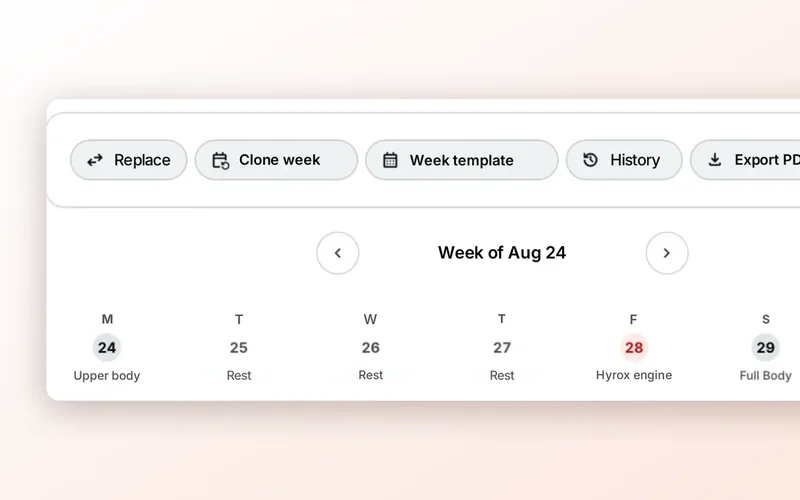
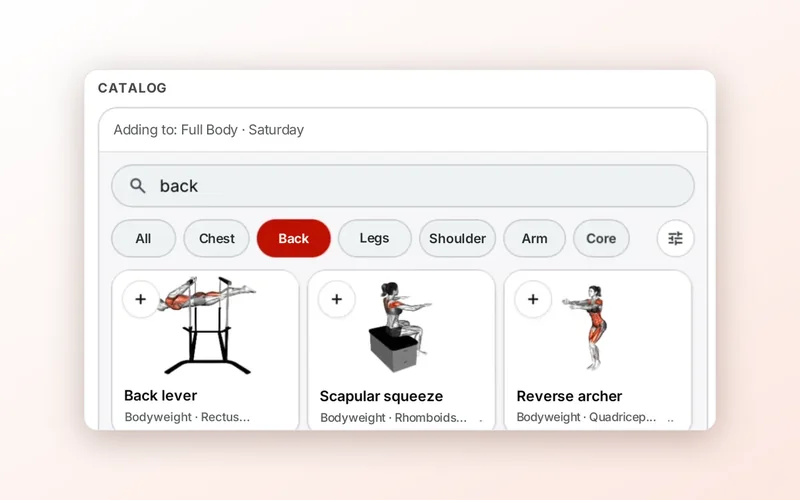
What you prescribe. In the plan editor every exercise has its sets, a rep range (“8-12”), a target RIR and the weight, set by set if you like. Weights go up or down in 2.5 kg steps with one tap, and with the “all sets” weight field you change every set at once.
What your client sees. In their app they see the exact weight for each set and RIR explained in plain words: “RIR 2 · 2 reps left in the tank.” When they train, the prescribed weight is already filled in and they only change it if they used something else. On the exercise screen they see their previous log, with their last weight and last reps.
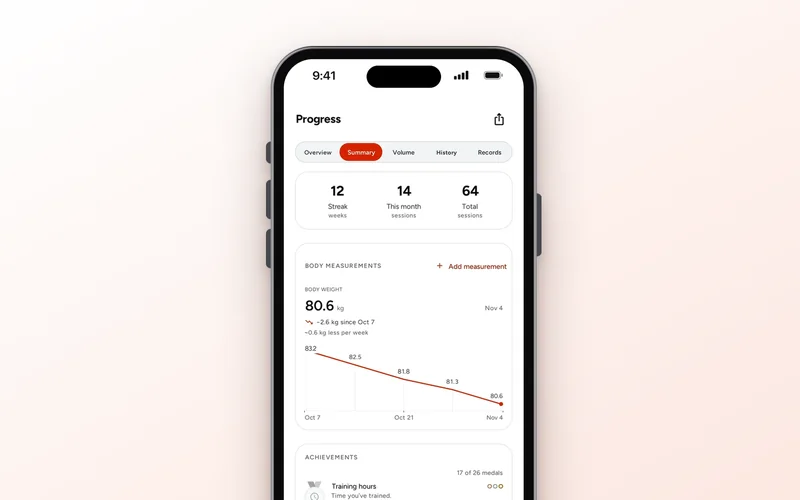
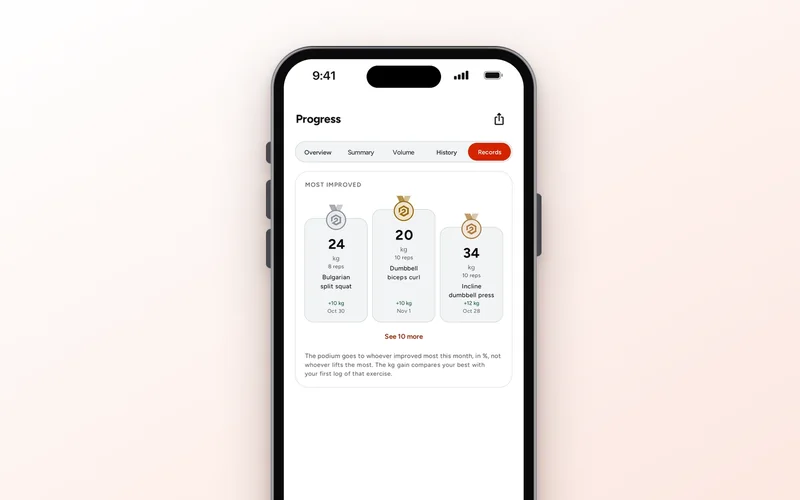
What comes back to you. They log every set with its weight and reps, and can tap how it felt (optional): “Easy,” “Moderate,” “Hard” or “Max.” With that you run double progression and RIR on data, not memory.
Help with the first weight. If an exercise doesn’t have a weight yet, the web app suggests one based on their last log and the RIR you’re asking for, and you apply it with one click. It only goes in if you click it.