
In short
- Ask little, every day, always on the same scale: five one-minute questions are enough.
- Look at the trend over several days, not one bad day, and cross-check it with their session logs.
- Set two or three measurable habits at most, and adjust them when they aren’t sticking.
What happens outside the gym matters more
Laura sleeps five hours three nights in a row, has a week of deadlines at work and is due for heavy legs on Thursday. If you don’t know, you give her the same weight as last week, and the session will most likely go badly or not happen at all.
That’s why it pays to ask every day how they’re doing. The key is keeping it to a minute: few questions, always the same ones, on a short scale. That way you can compare one Monday with another and spot trends.
A one-minute check-in
Five questions cover almost everything: how they slept, how much energy they have, their stress, their mood and their soreness. And, if they’re sore, where.
In the 2T4T app your client finds it in their plan as “How are you today?”. They answer five scales from 1 to 5 (“Sleep quality”, “Energy”, “Stress”, “Mood” and “Overall soreness”) and tap the areas under “Where are you sore?”. If they miss a day or make a mistake, they can fix it up to 7 days back.
One requirement. This is health data, so the client has to turn on the health data consent in their app profile. Without it nothing is saved, and their profile in your web app shows that consent is missing. Explain it on day one, when you sign them up.
If a client stops filling it in, message them in the chat. One line is enough:
“Hi Laura. Could you tell me in your check-in how you’ve slept this week? I want to adjust Thursday.”
How to read it in the web app
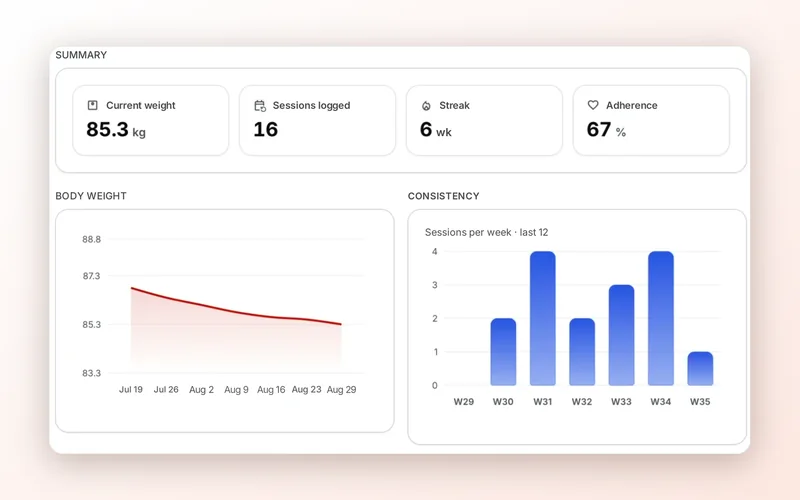
Each client’s Progress tab has two panels:
- Daily check-ins, last 14 days: one row per day with the five scales and the sore areas. Careful when reading it: for stress and soreness, 5 means more (worse); for sleep, energy and mood, 5 is better.
- Phone health data, last 14 days: daily steps, average sleep, resting heart rate and HRV, if the client connects Apple Health or Health Connect from the app. It’s read-only: the app reads that data and never changes it. It also needs the health consent.
Always read two weeks, not one day. A 2 for energy on a Monday says nothing; four days in a row below 3 does.
Habits: few, measurable and with a streak
A habit works when it can be ticked off without thinking: “8,000 steps”, not “move more”. And keep it to a few: two or three at a time. Give them six and they’ll stick to none.
In 2T4T you create them in each client’s Habits tab, with the new habit button. Quick templates give you the usual ones ready to go: water (2 liters), sleep (8 h), steps (8,000), protein (150 g) and meditation (10 min). You can also build your own by choosing:
- Type: yes/no, counter or time.
- Frequency: daily, weekly or monthly.
Your client ticks them off under “Today’s habits” in their app and sees their streak and the last 7 days. If their phone is connected, the steps and sleep habits fill in from what the phone measures. In your panel you see active habits, the ones done today and the best streak.
How to use it to adjust the week
Set yourself simple rules and apply them the same way every time. For example:
- Sleep and energy below 3 for three days: lower the intensity of the next session or consider a deload week.
- High stress all week: shorter sessions, same frequency. Keeping the routine matters more than the volume.
- High soreness in the same area two days after every session: review the volume for that area or the rest between sets.
- Resting heart rate going up and HRV going down for several days: a sign they’re recovering worse. Ask before you push.
- A habit missed for two weeks: the target is too high. Drop from 8,000 to 6,000 steps and go back up once the streak holds.
And always cross-check the check-in with their sessions: if Diego reports high energy and his logs say the load felt “Very light”, you have room to go up.