
In short
- Measure adherence every week: sessions completed out of sessions planned.
- Set yourself a fixed rule: if a client goes 7 days without training, you reach out.
- A short message with no blame, and adjust the plan before you push.
The signs come before the cancellation
By the time a client tells you they’re quitting, the decision has usually been made for weeks. The clues were there earlier:
- They skip sessions, especially the same one every time.
- They log less than they do, or stop logging.
- They take longer to reply and their answers get shorter.
- They move or cancel bookings.
- Their daily check-in gets worse: poorer sleep, more stress, less energy.
None of these says much on its own. Two or three at once, yes.
Measure adherence every week
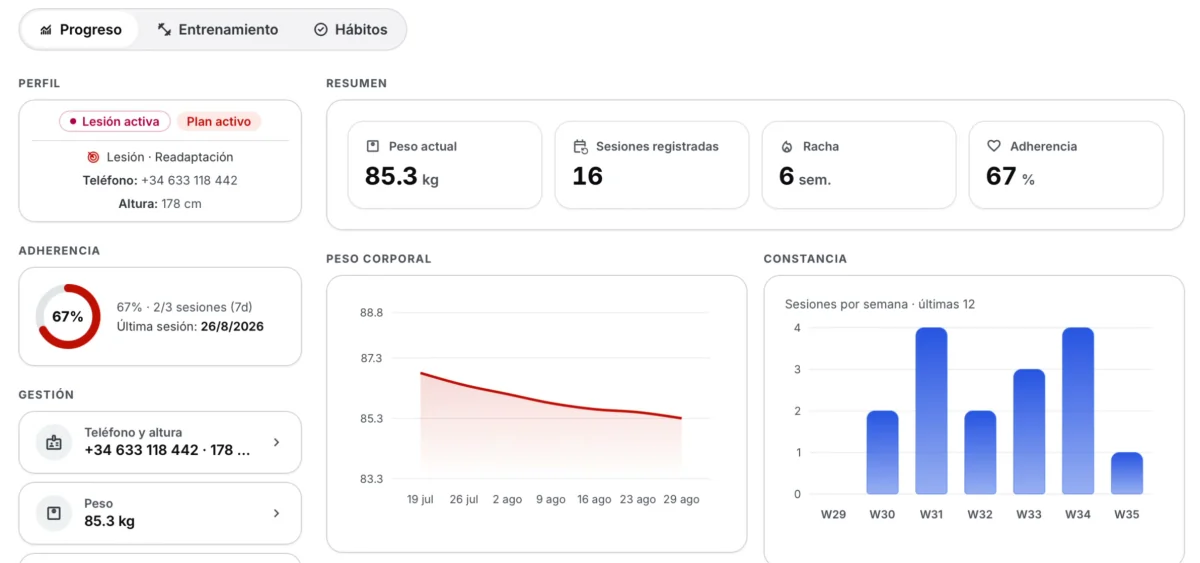
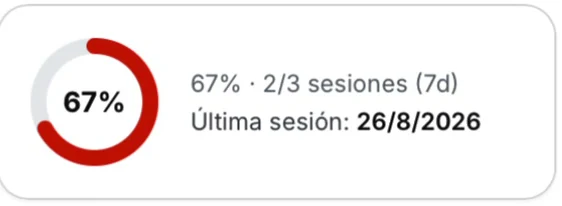
Adherence is the simplest and most useful number: sessions completed out of sessions planned over the last week. If you gave them three and they did two, they’re at 67%.
More than a fixed number, watch the trend. A client who goes from 100% to 67% and then 33% over three weeks is telling you something, even if they say nothing.
A fixed rule: at 7 days, you reach out
With a lot of clients, you can’t rely on remembering. Set a rule and stick to it: if someone goes a week without logging a session, you message them that same day.
Check separately on anyone who has a plan but has never trained. It’s usually a getting-started problem (they don’t know how to use the app, or aren’t sure what’s next) and one message fixes it.
What to say
Short, with no blame and with a question that’s easy to answer. For example:
“Hi Diego. I saw you couldn’t train this week. Would two days a week work better, Tuesday and Thursday?”
Offering a concrete adjustment works better than asking “how’s it going?”. If the plan doesn’t fit their life, change the plan: fewer days, shorter sessions or an easier week.
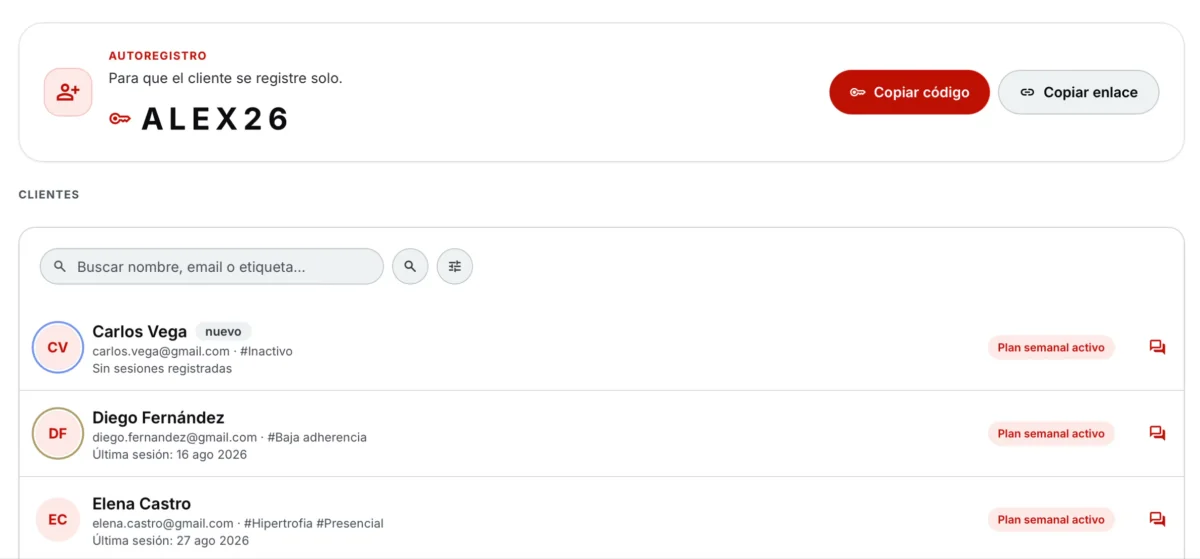
Sort your roster by who needs attention
Separate the people who need something from you: inactive, injured, newcomers. A tag of your own like “low adherence” or “back from holiday” lets you filter them in seconds and keep everyone in sight.